Demonstration of soil and water conservation and afforestation practices for communities in Kabuyanda
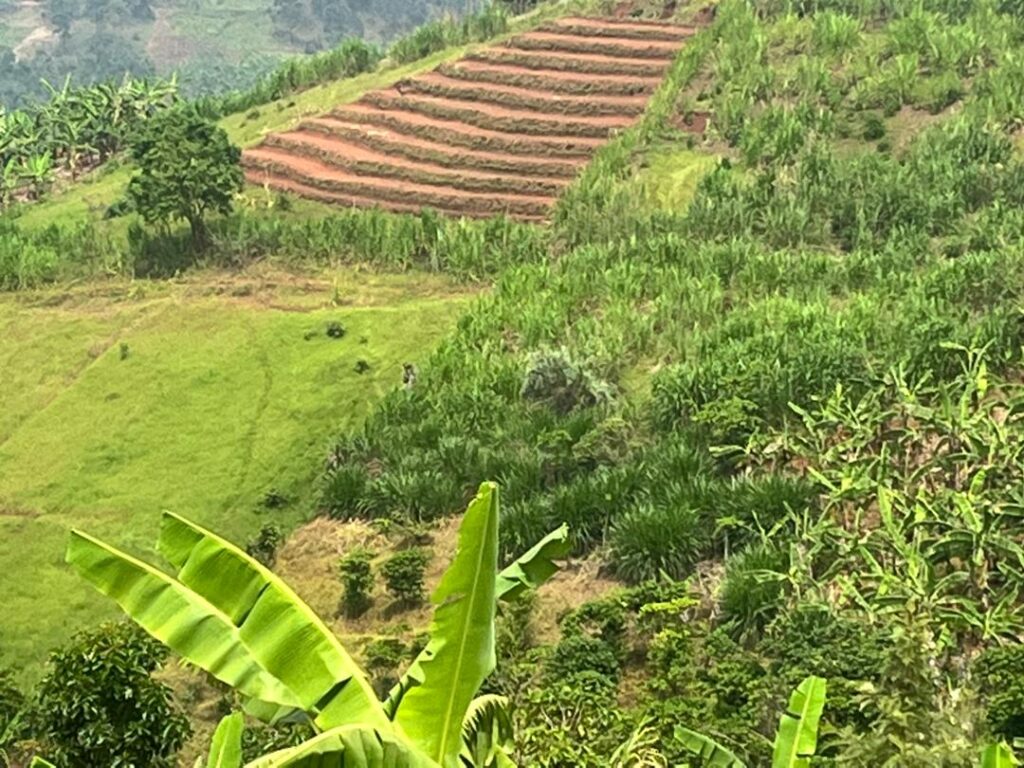
AidEnvironment was contracted by the Ministry of Water and Environment (MWE) to support communities to implement soil and water conservation measures and afforestation initiatives across the Kyabaganda, Kyezo, and Mishumba micro-catchments. The project is called Supporting Communities in Micro-catchments around Kabuyanda Irrigation Scheme, part of the Irrigation for Climate Change Project (ICRP).
Lasting for one year, the contract focuses on mobilizing, sensitizing, and training communities to adopt sustainable practices, supported by local structures to ensure effective implementation and the long-term maintenance of interventions.
Activities include identifying, mobilising, engaging and building the capacity of stakeholders and communities in undertaking catchment-based and community-driven actions in soil and water conservation, such as tree growing. Communities will be supported in implementing soil and water conservation measures in priority hotspots in the micro-catchments, and in restoring deforested and degraded land through community tree growing on individual farmers’ land and public land.
AidEnvironment has mobilized and engaged communities in catchment-based and community-driven soil, water, and tree-growing activities in the micro-catchments around Kabuyanda Irrigation Scheme and enabled them to participate in establishment of demonstration sites to show case soil and water conservation infrastructure and different tree species.
Why is there a need for demonstration of practices?
Like many countries, Uganda is facing increasing climate variability, leading to unreliable rainfall, recurring droughts or erratic rains, and increasing pressure on land and water resources. In agro-based communities such as those in project areas in Rwampara, Ntungamo and Isingiro Districts, these challenges hinder food security, livelihoods, and long-term sustainability.
The ICRP was initiated by Ministry of Water and Environment (MWE), with funding from World Bank, to build resilience by providing irrigation infrastructure and storage, as well as by promoting sustainable natural resource management.
The soil and water conservation and afforestation component of the project, as exemplified in the demonstration initiatives, addresses environmental risks that accompany irrigation development — such as erosion, deforestation, watershed degradation, loss of biodiversity or siltation — by restoring catchments, stabilising soils, and promoting sustainable use of land and water.
What does the demonstration aim to achieve?
- Stabilize and restore micro-catchments feeding into the Kabuyanda irrigation scheme.
- Reforest degraded land — both on public forest land (e.g. parts of nearby forest reserve) and on private / communal land — using indigenous species.
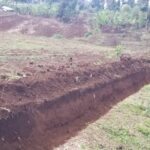
- Implement soil and water conservation (SWC) measures — such as infiltration trenches, percolation pits and terracing to prevent erosion and preserve soil fertility, while ensuring sustainable water flow to the reservoir and irrigation system.
- Engage and build capacity of local communities — mobilizing farmers, local leaders, and stakeholders to actively participate in restoration, tree-growing, land management, and maintenance of catchment areas.
- Promote livelihood opportunities — by combining environmental restoration with sustainable agriculture, potentially offering alternative income-generating activities alongside irrigation-based farming.
How will this demonstration benefit communities?
- Exposure to SWC measures will reduce erosion, water runoff, and nutrient loss, ensuring that farmland remains fertile over time.
- Communities gain enhanced skills and knowledge to sustain water supply. By preserving catchment health, the water inflows feeding the reservoir remain stable and clean, supporting reliable irrigation even under changing rainfall patterns.
- Exposure and knowledge to restore degraded ecosystems. By planting trees, communities help restore biodiversity, stabilize microclimate, and improve environmental resilience.
Conclusion
The soil and water conservation and afforestation demonstration under the Kabuyanda Irrigation Scheme represents a vital investment in climate resilience, combining infrastructure and environmental stewardship. By restoring degraded catchments, engaging communities, and integrating sustainable land management with irrigation and agriculture, the project offers a model for balancing development and conservation.
For communities in Kabuyanda, this means better food security, more stable water and land resources, and long-term resilience against climate shocks.
Authors: Kikundwa Anne & Brian Lukwago