Water Approaches used in the Elgon Pamoja Partnership
AidEnvironment (AE) and Uganda Breweries Limited (UBL) have embarked on a transformative journey towards the sustainable management of water catchment, the environment and natural resources in the Mt Elgon landscape of Eastern Uganda.
The project, Elgon Pamoja Partnership (Collective Action for Water, Environment and Natural Resources Conservation) in Uganda’s Elgon Landscape aims to foster environmental sustainability, drive positive socio-economic impact, and nurture a resilient and thriving Elgon region.
The project is being implemented in Kapchorwa, Bukwo, Kween and Bulambuli Districts. These districts are home to barley and sorghum farmers. Unfortunately, the production of barley and sorghum comes with environmental hazards and lacks livelihood opportunities for the (young) population in the area. Other challenges include environmental degradation, vulnerable livelihoods, inadequate production of raw materials for Uganda Breweries Limited (UBL), and a notable lack of collective action among stakeholders concerning water resource management and landscape restoration.
How the project approaches water management
Turning Rain into Opportunity
Rainwater Harvesting is the collection and storage of rainwater from rooftops, land surfaces, or other catchments for later use in homes, farms, and communities. This enables communities to access reliable water for farming and household use; increase their food production and income; become more resilient to drought and climate change; and improve hygiene and sanitation. Rainwater Harvesting empowers communities through resource management.
Rainwater Harvesting is useful because it
- Improves Water Access – provides water during dry periods
- Supports Agriculture – useful for irrigation, livestock, and gardens
- Reduces Costs – enables less spending on buying water
- Protects the Environment – reduces pressure on rivers and groundwater
- Strengthens Livelihoods – helps families and communities become more self-reliant
Simple Ways to Harvest Rainwater
- Roof Catchment Systems – Collect water from roofs using gutters and pipes
- Water Storage Tanks – Store water safely in tanks, drums, or underground reservoirs
- Farm Ponds & Small Dams – Capture rainwater for irrigation and livestock
- Infiltration Pits – Allow water to recharge groundwater
2. Soil and Water Conservation (SWC) Measures
Water scarcity remains one of the most pressing challenges facing communities today, with significant impacts on agriculture, livelihoods, and ecosystems. In Uganda, increasingly erratic rainfall patterns have heightened the urgency for effective soil and water conservation practices. The UBL (Upstream, Basin, and Lowland) approach to water management provides a promising solution by emphasizing integrated conservation measures that enhance water retention, improve soil health, and strengthen overall water security.
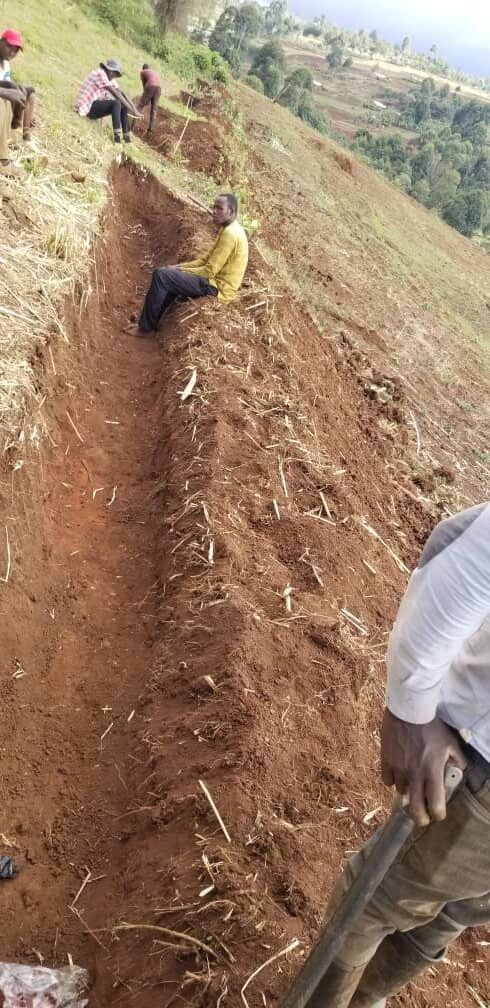
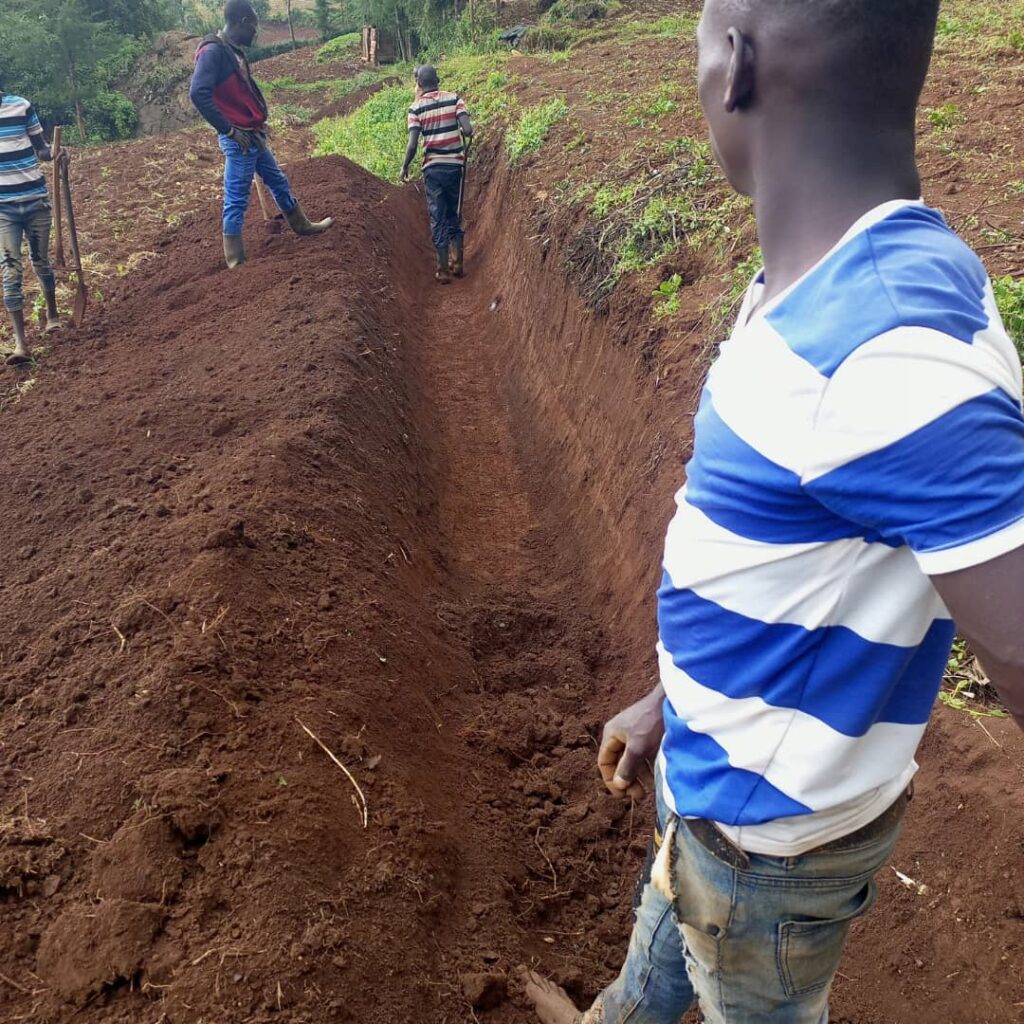
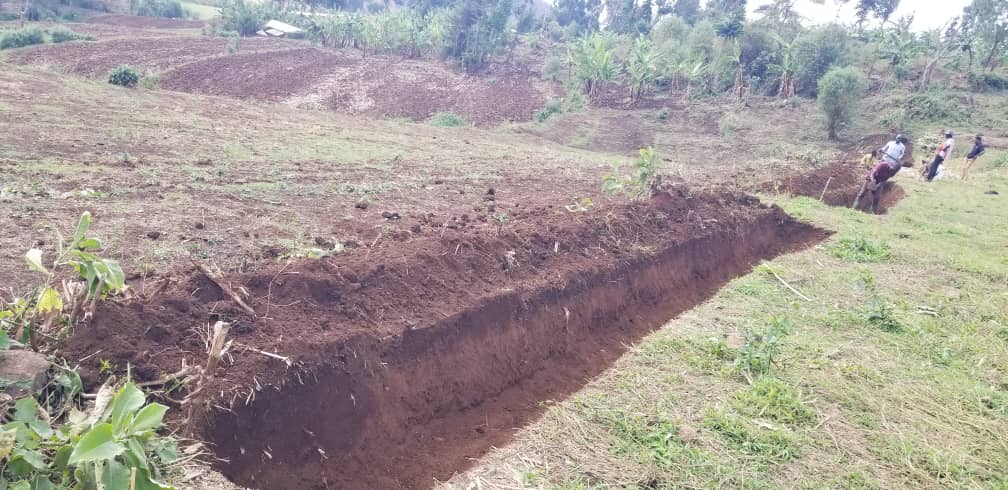
The construction of SWC measures like trenches collect runoff in the gardens allow infiltration and recharge of groundwater. SWC structures help replenish groundwater through 3R (water recharge, retention, resuse). Additionally, these structures reduce the amount of runoff entering rivers, minimizing contamination and sedimentation.
How does SWC help local communities
- By collecting and reusing runoff, communities can increase water availability for agriculture.
- Increase in soil moisture and groundwater also support agriculture, leading to improved crop productivity.
- SWC measures help communities adapt to climate variability, enhancing their resilience to droughts and water scarcity.
- Reduced runoff also means less sediment and pollutants entering water bodies, improving water quality and ecosystem health.
- SWC measures like trenches help capture the top fertile soil which would have been lost, this boosts the soil fertility.
Trenches established along the steep slops of Mountain Rwenzori