Soil and Water Conservation to Combat Desertification and Drought
By Brian Lukwago and Anne Kikundwa
This year, as we participate in the global observance of World Day to Combat Desertification and Drought, under the theme “Rangelands: Recognize. Respect. Restore”, we highlight the central role of some of our initiatives in climate resilience, food and water security, and biodiversity conservation. Most of AidEnvironment’s initiatives reflect ongoing efforts to address land degradation, strengthen drought resilience and support communities in restoring the lost glory of the environment.
Uganda — like many countries — is facing increasing climate variability, leading to unreliable rainfall, recurring droughts or erratic rains, and increasing pressure on land and water resources. In agro-based communities such as the micro-catchments (Mishumba, Kyezo and Kyabaganda) under our area of operation in Rwampara, Ntungamo and Isingiro Districts, these challenges hinder food security, livelihoods, and long-term sustainability.
AidEnvironment was contracted by the Ministry of Water and Environment (MWE), with funding from the World Bank under the Irrigation for Climate Resilience Project (ICRP), to help build resilience in a community where they plan to install irrigation infrastructure. To this end, AidEnvironment has engaged in the promotion of sustainable natural resource management with emphasis on soil and water conservation and afforestation to addresses environmental risks that accompany irrigation development — erosion, deforestation, watershed degradation, and loss of biodiversity or siltation.
Key measures to enhance restoration of the catchments, stabilization of soils, and promotion of sustainable use of land and water, include:
Afforestation and Reforestation
Planting trees and restoring forests to stabilize soil, reduce wind erosion, improve water infiltration, and increase soil organic matter.
Sustainable Land Management
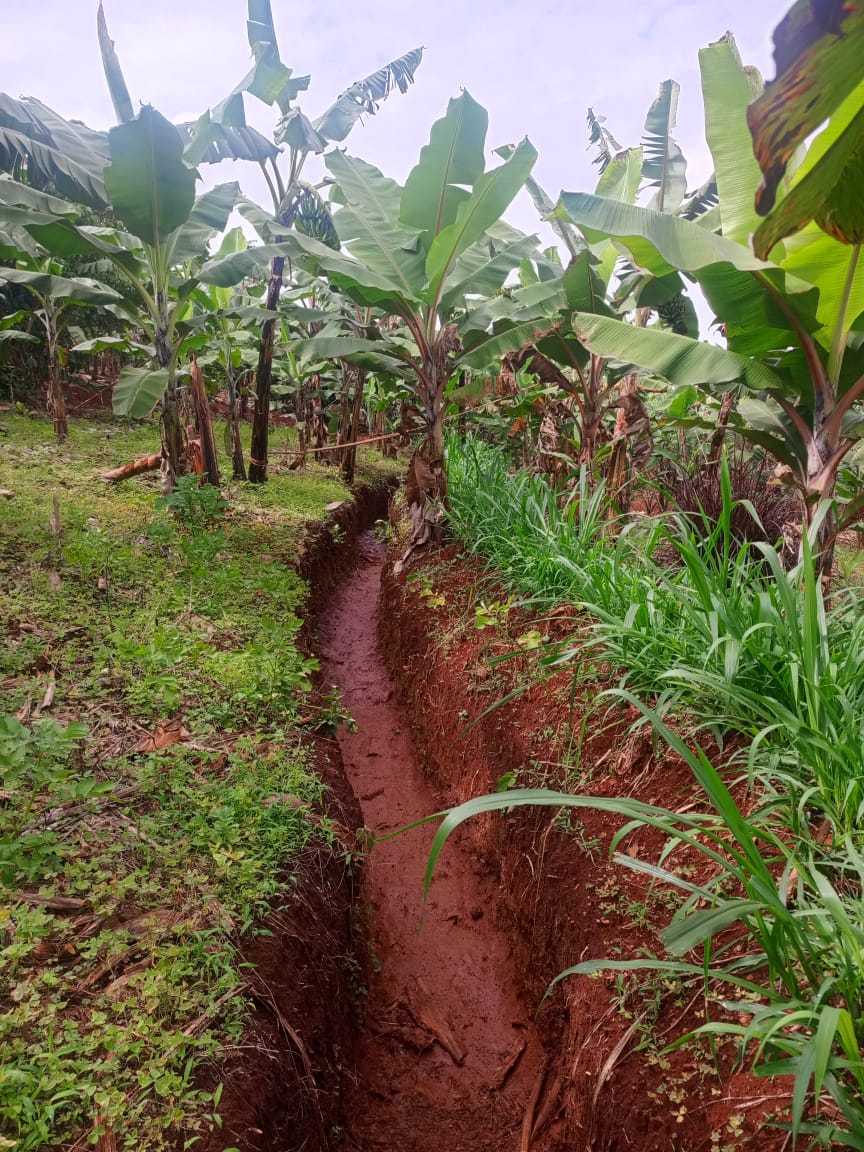
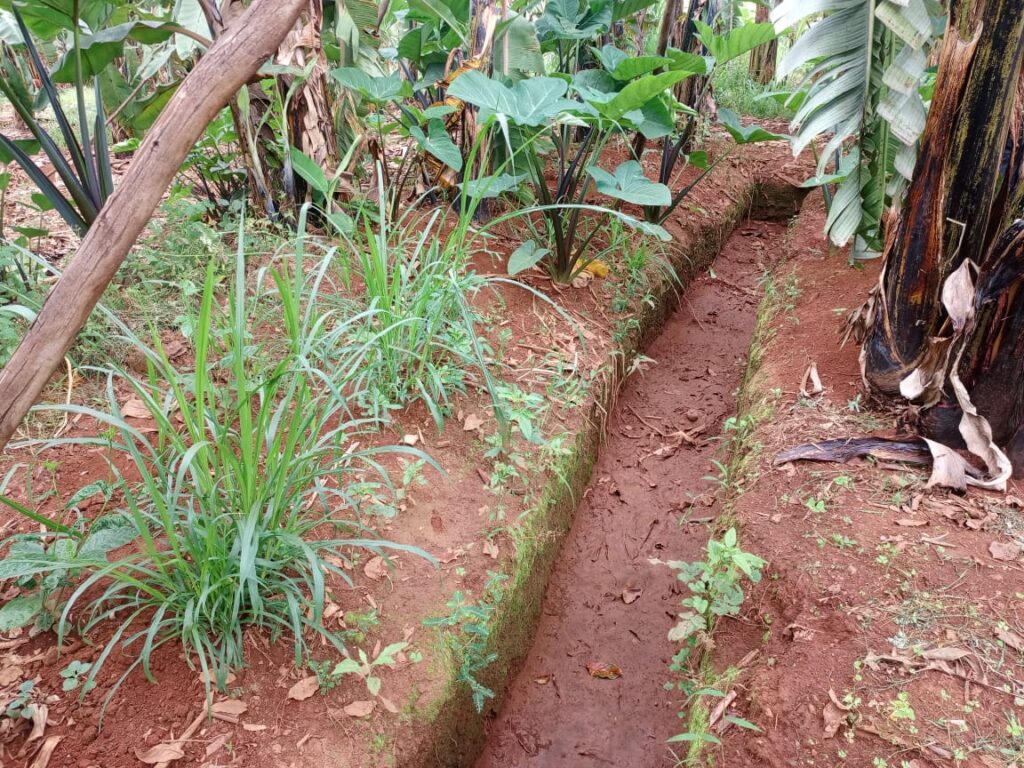
Soil and water conservation reduce run off and maintain soil fertility. Infrastructure for this initiative include trenches, percolation pits, terraces and contours constructed on slopes to reduce runoff and soil erosion, and mulching wherein soil is covered with crop residues, grass, or other organic materials to reduce evaporation, conserve moisture, suppress weeds, and improve soil quality.
Agroforestry
Integrating trees with crops and livestock to enhance soil fertility, provide shade, reduce erosion, and diversify income sources.
Community Awareness and Policy Measures
A combination of educating communities on sustainable land and natural resource management and advocacy towards enforcing laws against deforestation, overgrazing, and unsustainable farming practices have proven to be more effective than relying on a single measure. With the main focus on protecting land from degradation, improving water availability, and maintaining vegetation cover, AidEnvironment is greatly contributing to combating desertification and drought in these areas.
Desertification and drought are a serious environmental problem that threatens ecosystems, agriculture, and human livelihoods. However, through sustainable land management, water conservation, tree planting, soil conservation, and effective policies, detrimental impacts can be reduced and degraded land can be restored.