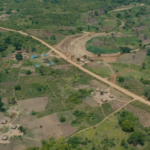
How Cash-for-Work Turned Environmental Degradation into Community Action in Yumbe
Article written by AidEnvironment Uganda team, Emmy Brian Okot
What happens when environmental restoration becomes a source of income rather than a cost?
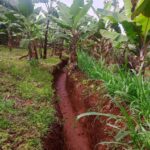
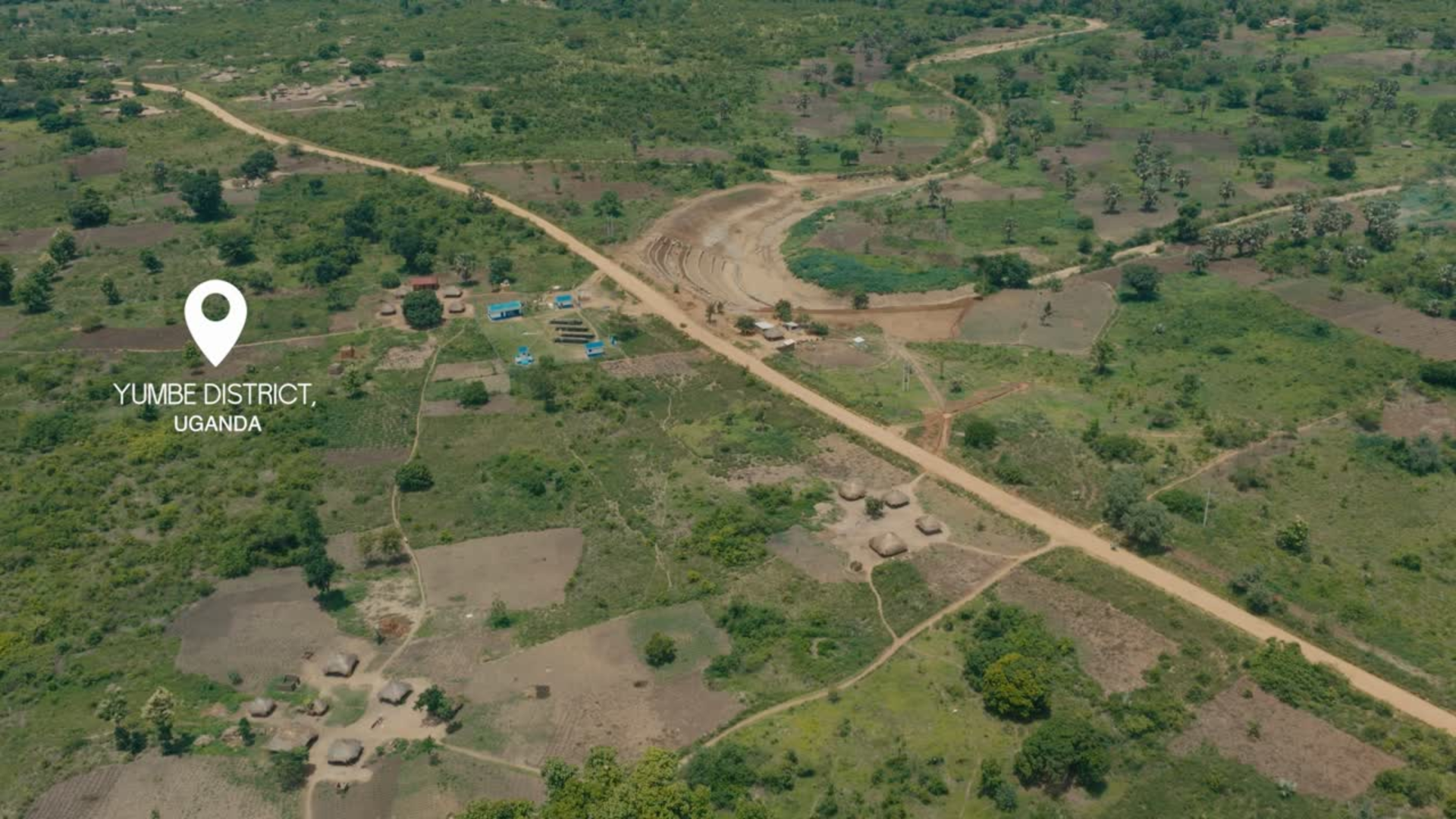
In Yumbe District, Uganda, the Lwu Stream catchment, which feeds the Yangani Water Supply System, was under increasing pressure. Soil erosion, collapsing streambanks, sand mining, gold panning, and vegetation loss were degrading the catchment and threatening a vital water source relied upon by both refugee and host communities.
Without intervention, sedimentation would continue to undermine water quality, damage water infrastructure, and compromise the long-term sustainability of the Yangani Water Supply System.
To address this challenge, the GIZ Water Supply for Refugee and Host Communities Programme, implemented by AidEnvironment in partnership with the Ministry of Water and Environment (Upper Nile Water Management Zone) and Yumbe District Local Government, introduced a catchment restoration initiative using a labour-intensive Cash-for-Work approach.
The idea was simple yet transformative: place communities at the centre of restoring the landscape while creating much-needed livelihood opportunities.
Between July 2025 and March 2026, 381 community members, comprising 196 host community members and 185 refugees, participated in restoration activities and earned income through weekly Cash-for-Work engagements.
Together, they:
- Restored degraded stream buffer zones
- Planted and maintained thousands of indigenous and multipurpose trees
- Rehabilitated erosion hotspots
- Protected sensitive riverbanks and water source areas
- Stabilised collapsing streambanks using sisal sandbags, stones, and vetiver grass
The results demonstrate what is possible when conservation and livelihoods go hand in hand:
20,355 trees planted
50.89 hectares restored
6 kilometres of stream buffer zones rehabilitated
Critical water infrastructure safeguarded
Enhanced community capacity in soil conservation, water source protection, and sustainable land management
But perhaps the most important outcome was not measured in hectares or kilometres.
The initiative provided vulnerable households with a source of income, reduced dependence on environmentally-destructive livelihood activities, and strengthened collaboration between refugee and host communities around the shared responsibility of protecting natural resources.
The Yangani experience demonstrates that communities are not merely beneficiaries of environmental programmes; they are the most effective custodians of the resources on which they depend.
By linking restoration to livelihoods, Cash-for-Work transformed environmental degradation into collective action, restored hope along the Lwu Stream, and laid a strong foundation for the long-term protection of the Yangani Water Supply System.